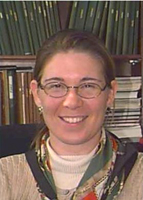
Kathryn Yount
Ph.D., Social Demography, Johns Hopkins School of Hygiene and Public Health, 1999
M.H.S., Demography, Johns Hopkins School of Hygiene and Public Health, 1994
B.A., Political Science, University of North Carolina, Chapel Hill, 1991
Dr. Yount is Associate Professor of the Hubert Department of Global Health and the Department of Sociology at Emory University. She is a family demographer with expertise in gender, intergenerational relations, and disparities in human resources across the lifecourse. She is editor of a volume on family change in the Middle East and has conducted research in the Middle East since 1995. She has authored more than 50 publications in leading journals in Demography, Sociology, and Public Health, and more than 20 research grants from Emory, NSF, NIH, the World Bank, and private foundations have supported this work. She has received awards from Emory and the American Public Health Association for her research, and she currently serves on the editorial board of the Journal of Marriage and Family (2005 – present), chairs the Social Science Subcommittee of the University Research Committee at Emory, and is a member of the Executive Committee of the Institute for Developing Nations at Emory. She is a Fellow of the International Center for Research on Women and a standing consultant with Measure DHS. She is country coordinator for the DI adult study in Egypt.